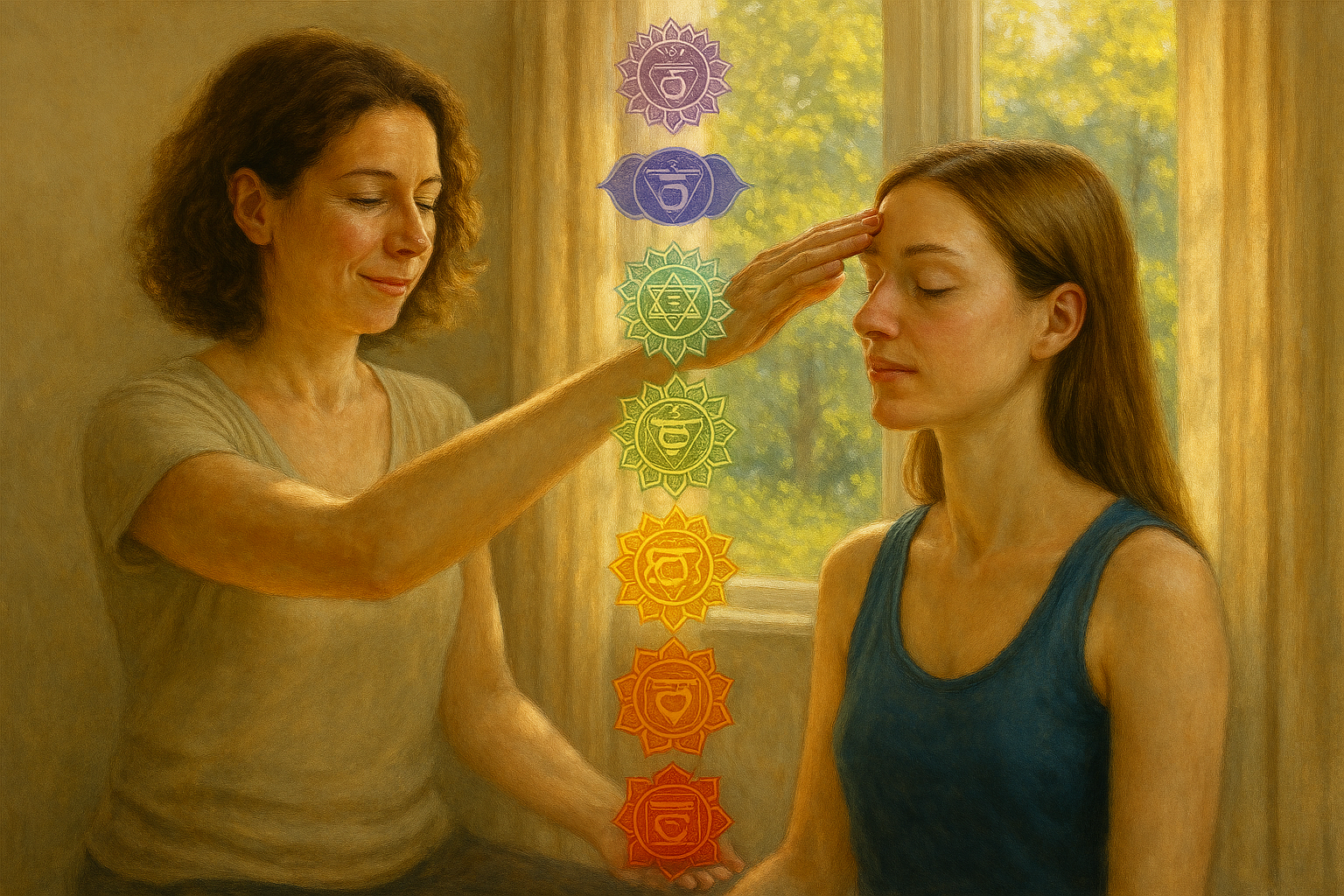
Kinesiology is a holistic, non-invasive health modality that integrates principles of anatomy, physiology, energy balancing, and muscle monitoring to identify and resolve stressors within the body. Drawing from Eastern and Western traditions, kinesiology works with the body’s innate intelligence to restore balance, enhance function, and improve overall well-being. It is a gentle, body-based approach that helps us understand where stress is stored and how the stress is affecting the body.
Muscle testing serves as a biofeedback tool, allowing practitioners to assess structural, biochemical, emotional, and energetic imbalances. Neuroenergetic Kinesiology (NK), a specialized branch, using acupressure formatting system and finger modes to pinpoint areas of stress (even with the subconscious).
Kinesiology goes beyond symptom management—its client-centered approach supports self-awareness, performance optimization, and personal growth. Practitioners help individuals detect and correct imbalances related to stress, injuries, and overall vitality, empowering them to lead more harmonized lives.
Many people arrive at kinesiology after trying other things — talking therapies, medications, lifestyle changes — and still feel that something isn’t quite resolved. Often, that’s because stress doesn’t only live in the mind. It lives in the nervous system, the muscles, and the body’s learned patterns of response.
Kinesiology works by listening to the body rather than trying to override it. Through gentle muscle feedback, we gain insight into where stress is being held and what the body needs in order to restore balance.
Muscle feedback isn’t used to diagnose or label.
It’s used as a way to:
- bypass the thinking mind
- access where stress is held outside conscious awareness
- listen to what the body prioritises
The body already knows:
- what is unresolved
- what is ready to shift
- what needs more safety first
Kinesiology simply provides a structured way to listen.
This isn’t about force, correction, or pushing through discomfort. It’s about creating the conditions where the body feels safe enough to let go.
People often describe kinesiology as subtle but powerful. Changes may feel quiet at first — improved sleep, a sense of calm, clearer thinking — yet these shifts tend to be lasting because they come from the body itself.
Kinesiology can support people experiencing ongoing stress, emotional overwhelm, fatigue, tension, or a sense of being ‘stuck’. It does not replace medical care, but it can work alongside it, supporting the body’s natural capacity for regulation and healing.
At its core, kinesiology is about listening. Listening to the body’s signals. Listening to what hasn’t yet had the chance to resolve.