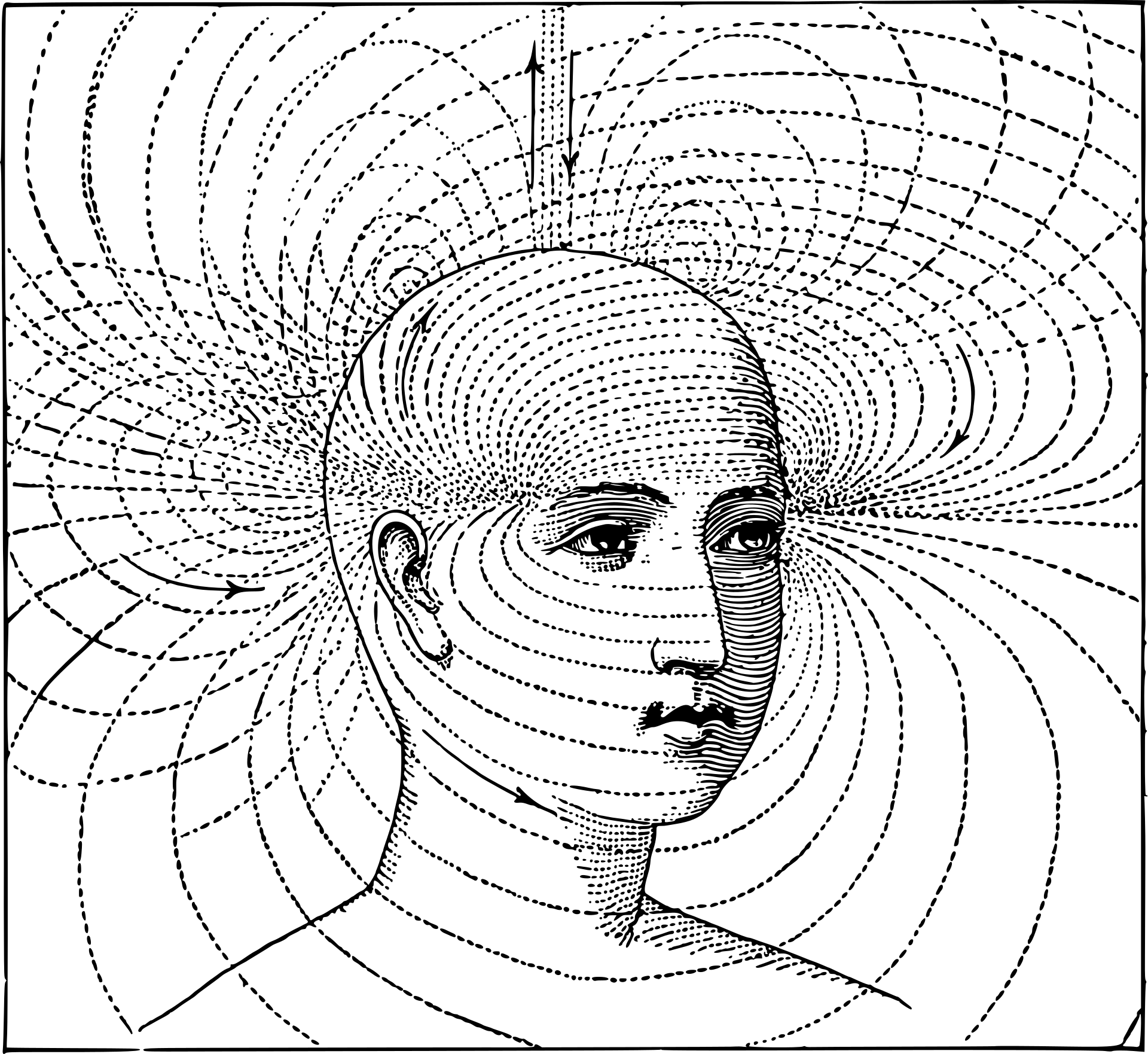
Many people think of intuition as something mysterious or abstract — a feeling that appears out of nowhere. But modern neuroscience suggests intuition is not random at all. It is a rapid form of information processing that happens below conscious awareness. Intuition is a real, measurable aspect of how humans process information.
Your body is constantly receiving and analysing information: subtle facial cues, tone of voice, posture, internal sensations, environmental signals, and emotional patterns. Long before the thinking mind forms a conclusion, the nervous system has already evaluated what it’s sensing.
Research in cognitive neuroscience shows that unconscious perceptual processing plays a significant role in decision-making, influencing choices before conscious reasoning becomes aware of the factors involved.
In other words, what we call intuition is often the body recognising patterns faster than the mind can explain them.
A 2023 neuroscience analysis identified several core biological processes involved in intuitive cognition, including pattern recognition, somatic markers (body-based signals), interoception (internal sensing), and mirroring mechanisms that help us read others. These processes work together across multiple brain systems rather than existing in one single “intuition centre.”
This helps explain why intuitive knowing can feel physical — like a tightening in the stomach, a sense of ease, or a subtle pull toward or away from something. The body is not guessing. It is integrating information quickly.
Studies using brain imaging have also shown that regions such as the anterior cingulate cortex and insula — areas involved in emotion, evaluation, and decision-making — become active during intuitive insights. These findings suggest intuitive understanding relies on rapid, nonconscious recognition processes that combine emotional and perceptual information.
Intuition is therefore not separate from physiology. It is physiology functioning efficiently.
Some experimental research has even found that nonconscious emotional signals can improve decision accuracy and confidence, demonstrating that information we are not consciously aware of can still guide us toward effective choices.
There is also growing interest in how intuitive states relate to “flow” — those moments when action feels effortless and responsive. Systems neuroscience suggests flow and intuition share a foundation in nonconscious processing that selects the most likely or adaptive response without needing deliberate analysis.
When people are regulated, present, and attuned to their internal signals, this process often becomes clearer and more reliable. When they are overwhelmed or disconnected from their body, intuitive signals can become harder to recognise.
This is one of the reasons body-based approaches can feel so different from purely cognitive ones. They don’t try to force insight. They help restore access to signals that are already there.
Kinesiology works with this principle by listening to the body’s responses rather than overriding them. Instead of asking the mind to solve everything, it supports communication between conscious awareness and deeper physiological processes.
Often, intuition doesn’t need to be developed. It needs to be recognised.
Because beneath the noise of stress, habit, and expectation, the body is already paying attention.
References:
Damasio, A. (1994). Descartes’ Error.
Neuroscience of Consciousness (2024) — intuition and flow
Sutil-Martín & Rienda-Gómez (2020) — Frontiers in Psychology
Sadler-Smith (2023) — Oxford University Press
Volz (2006) cited in later review — neuroscience of intuitive processes
Lufityanto et al. (2016) — unconscious emotional information & decisions
Image credit: Pixabay